
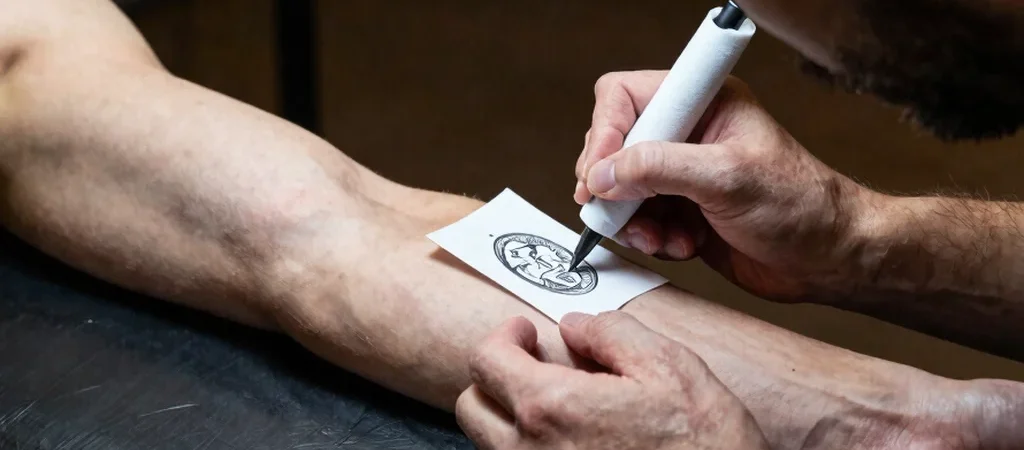
A tattoo design does not sit on a flat page once it reaches the body. On an arm, shoulder, or leg, it has to work with curves, movement, and the space around it. That is why placement deserves a conversation before the final size is decided.
Follow the Body’s Lines
A long motif may follow the line of a forearm or shin, while a compact shape can settle more comfortably on a shoulder or calf. The artist can help consider how the design looks from different angles, not just when the arm or leg is held still. Small shifts in direction can change whether a piece feels balanced with the body.
Give Details Enough Room
Fine patterns, close-set lines, and tiny features need enough space to remain legible as a tattoo. If a design feels crowded at the size you first imagined, enlarging it or simplifying a detail may preserve its overall character. This is a practical trade-off worth discussing with the artist rather than trying to solve from a phone image alone.
Bring a Clear Reference
When you visit the Strumica studio, bring the reference you have been considering and be ready to talk about the area you have in mind. Mention what matters most to you: visibility, the shape of the composition, or how it sits with existing tattoos. A useful placement conversation turns a general idea into a more considered plan.